Documentation
- Getting Started
- Deployment

- Technical Prerequisites
- Data Privacy and Routing
- Administration
- Enterprise Search Connectors
- Managing Connectors
- Connector Home View
- Sources
- Content Transformation
- ACL Assigner
- Adjustable Text Extractor
- Data Logger
- Document Classifier
- Document Preview Generation
- Document Splitter
- Document Translation
- Html Token Remover
- Metadata Assigner
- Metadata Extractor
- Metadata Mapper
- Text Extractor
- Vectorizer and Embeddings
- LLM Specific Configurations - Content Transformers
- Security Transformation
- General Crawl Settings
- Performance Considerations
- Crawl Modes
- Crawl Scheduling
- Standard Schema
- State View
- Principal State View
- AI and Query Pipelines
- Search Engines
- UI, MCP, Agents and Bot Integrations
- Backup and Restore Concept
- Software Updates and Upgrade
- Releases and Release Notes
Document Preview Generation
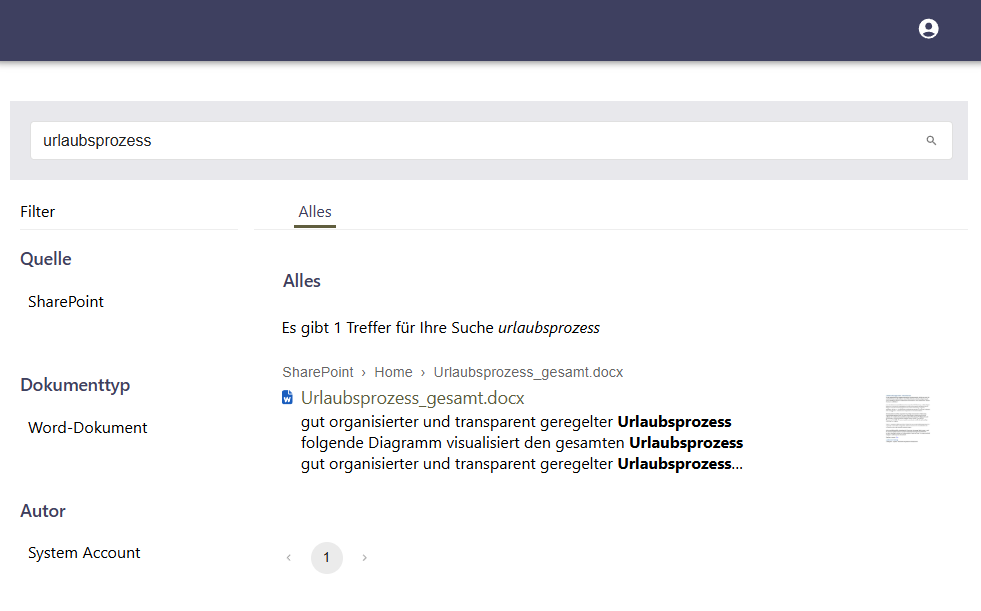
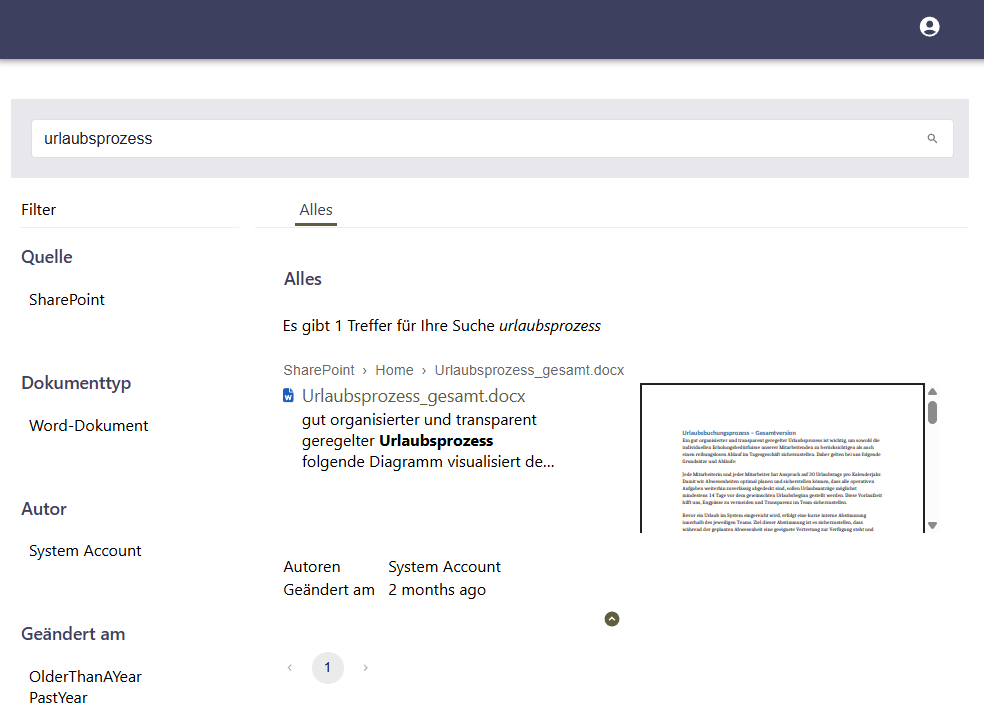
This stage allows for generating document previews, in form of PDFs as well as PNGs. These previews are stored within the configured database (see Database Settings ).
The previews look as follows:
APIs and Permissions
Our Suite in turn provides two API endpoints, i.e., /api/v1/preview/thumbnail
and/api/v1/preview/pdf
which for instance our search frontend (see Search Interface Configuration ) uses to server previews side by side with the search results. Previews are only accessible to authenticated users and only if these users have access to the according documents in search and the underlying content source.
Preview Generation Service
Our (PDF) preview generation relies on Libre Office and an external service, which customers have to deploy. The deployment of this service is described here.
Configuration Parameters
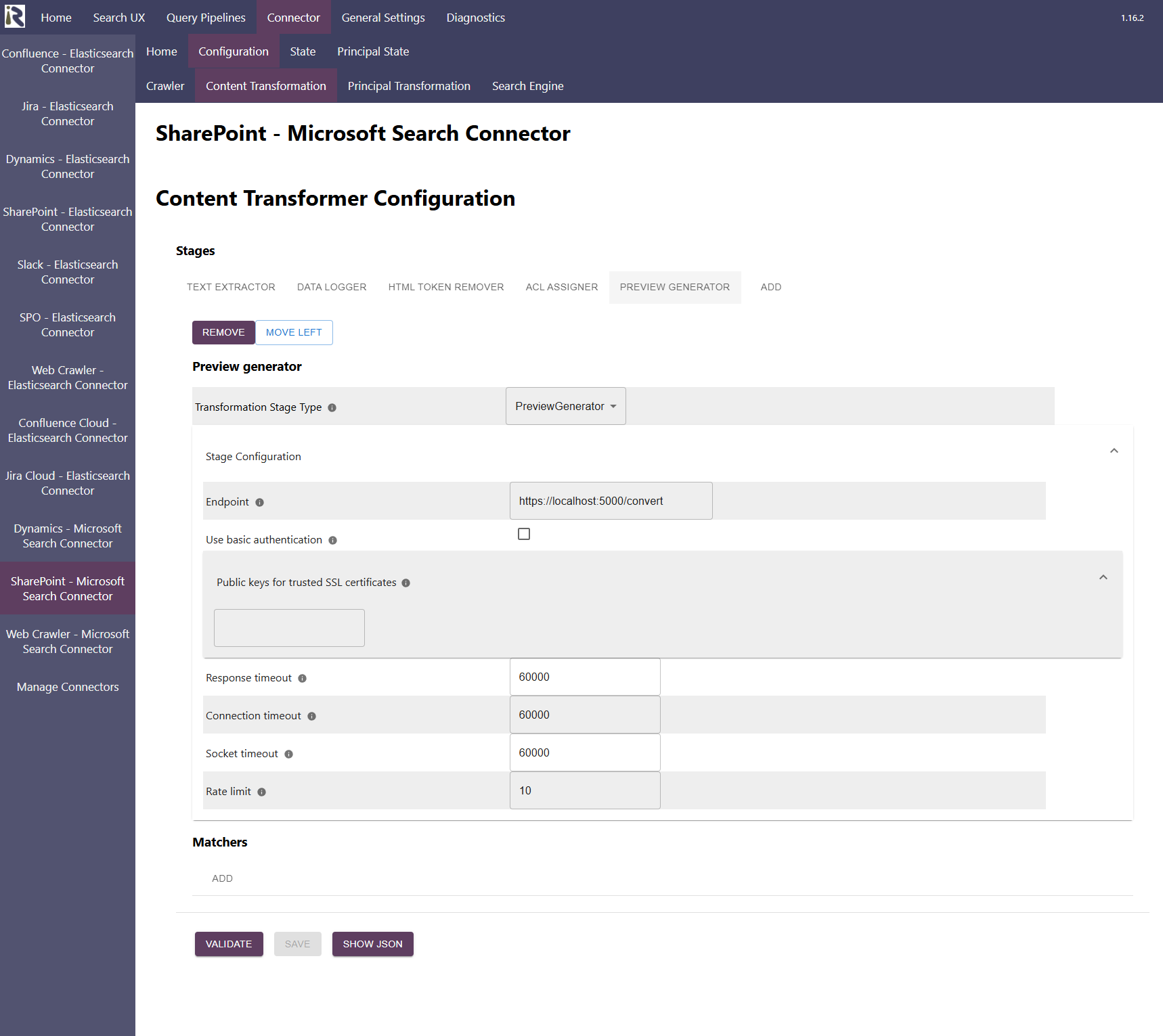
Endpoint: This is the http address of Libre Office PDF converter service
Use basic authentication: if set, the connector will use the provided username and password to authenticate against the conversion service
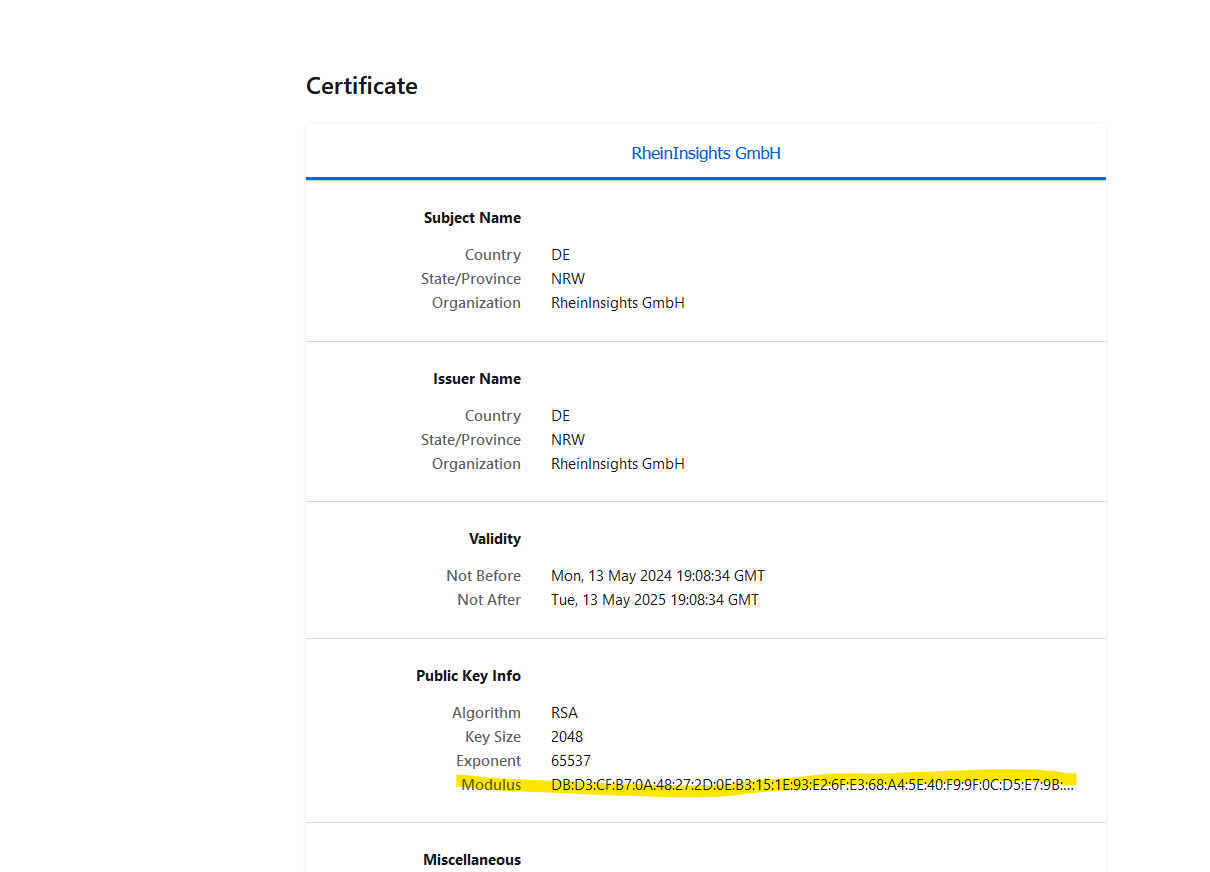
Public keys for SSL certificates: this configuration is needed, if you run the environment with self-signed certificates, or certificates which are not known to the Java key store.
We use a straight-forward approach to validate SSL certificates. In order to render a certificate valid, add the modulus of the public key into this text field. You can access this modulus by viewing the certificate within the browser.
Response timeout (ms). Defines how long the connector until an API call is aborted and the operation be marked as failed.
Connection timeout (ms). Defines how long the connector waits for a connection for an API call.
Socket timeout (ms). Defines how long the connector waits for receiving all data from an API call.
Rate limit: limits the number of API requests for second against the endpoint.